Table of Contents
He recommended that alcoholism was not just a physical craving for alcohol, however additionally a much deeper spiritual hoping and an emotional interference from the self and others. He suggested that true recuperation needed not only abstinence from alcohol, but likewise a spiritual awakening, a reconnection with the self, and a makeover of one's inner being.
He shared his assistance for the spiritual and psychological principles of AA and his hope that his understandings would contribute to the understanding and therapy of alcoholism. Jung's letter to Costs W had a profound effect on the growth of AA and its 12-step program. It helped solidify the spiritual and psychological aspects of AA's technique to recovery, and it remains to be taken into consideration a vital historic paper in the field of dependency therapy.
Evaluating Medication With Depression therapy
In AA, this concept is utilized to connect recovering problem drinkers with a neighborhood of individuals who have experienced similar battles, and it provides a resource of support and understanding. Additionally, Jung's principle of the "archetype" has actually been included right into the AA program. The archetype is a global symbol or pattern that exists in the cumulative subconscious and reflects the basic qualities of human experience.
His concepts remain to shape our understanding of the human subconscious and influence. Edward Edinger, a popular Jungian analyst, increased on Jung's theory of the ego-self axis. He argued that the ego's key duty was to offer the self, which he saw as a divine force that was higher than any person.
We can observe the idea of the ego-self axis in culture in many methods. In literary works and art, we see characters having a hard time to integrate their conscious and subconscious selves, such as in the works of James Joyce or Virginia Woolf.
Integration and Long-Term Recovery Beyond Depression therapy
According to Campbell, the hero's journey contains numerous stages, including the phone call to journey, crossing the limit, dealing with trials and tribulations, and ultimately attaining an objective or advantage. Campbell argued that by understanding the hero's trip, we might obtain a deeper understanding of ourselves and our area in the world.
Campbell thought that misconceptions were not just tales, yet additionally expressions of the collective unconscious. He suggested that myths offer to connect the individual with the global human experience and give a means to access the deeper aspects of our subconscious. Campbell's map for mythology has had a profound impact on preferred culture, as well as the research study of folklore and religion.
Below are the primary assumptions of the MBTI: The MBTI presumes that character is inherent to people and is shaped by their integral qualities, preferences, and propensities. It recommends that people are born with specific proneness towards specific point of views, feeling, and behaving, which continue to be relatively steady throughout their lives.
introversion (I), picking up (S) vs. instinct (N), thinking (T) vs. sensation (F), and judging (J) vs. perceiving (P). This causes the identification of 16 possible character types based on the mixes of these choices. The MBTI suggests that each character kind has one-of-a-kind toughness and restrictions, and no one kind is inherently much better or worse than one more.
Why Ego-State Therapy Addresses Dissociation

The MBTI thinks that people adjust their individuality actions based upon the needs of the environment and the circumstance they are in. It suggests that people might show various actions and preferences in different circumstances, which can be influenced by factors such as training, society, and life experiences. The MBTI recommends that a person's individuality type affects their behaviors, decision-making, and communication styles.
The MBTI is normally provided via a survey or analysis that asks people to suggest their choices on a series of statements or inquiries associated with the four dichotomous sets of individuality dimensions (extraversion vs. introversion, noticing vs. instinct, thinking vs. feeling, and evaluating vs. viewing). Based on their reactions, individuals are assigned a four-letter code that represents their MBTI kind.
EMDR Therapy: A Proven Method for Trauma
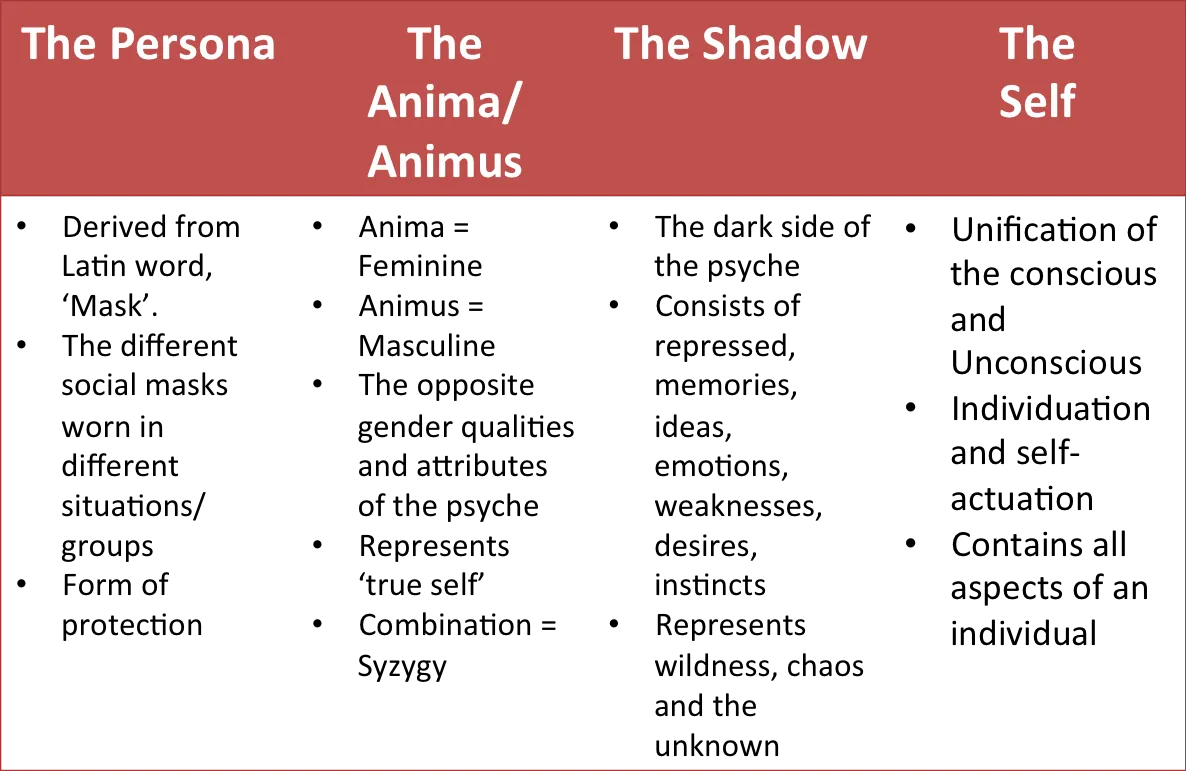
introversion (I), picking up (S) vs. instinct (N), thinking (T) vs. feeling (F), and evaluating (J) vs. viewing (P). Below is a summary of the eight function key ins the MBTI: People with a choice for Te often tend to concentrate on rational reasoning, unbiased analysis, and useful decision-making. They are often crucial, effective, and assertive in their method to analytical and decision-making.
Individuals with a choice for Ti have a tendency to concentrate on logical evaluation, vital reasoning, and developing inner structures for understanding the globe. They are frequently reflective, precise, and logical in their thinking, and may stand out in roles that require in-depth analysis, problem-solving, and theoretical understanding. People with a choice for Fe tend to concentrate on structure harmonious connections, empathizing with others, and keeping social consistency.

Navigation
Latest Posts
Exploring Parent Therapy in Napa, CA: An Detailed Resource
The Hidden Reality of High-Level Performance
Your Exploration Through Dynamic Psychotherapy and Personal Growth