Table of Contents
If you're regreting, remember this: your pain shows the deepness of your connection. It's not something to "overcome" yet rather to move through, bring your love and memories ahead into a life that, while permanently changed, can still hold significance and joy.
Sorrow is an all-natural emotional action to loss. Grieving is a procedure that can assist you concern terms with a loss, such as when a loved one passes away. Everyone experiences grief in different ways. Your experience of sorrow and just how you deal with it will rely on different aspects. These may include your age, previous experiences with grief and your spiritual or religious sights.
Anticipatory grief implies sensation sad prior to the loss occurs. As opposed to regreting for the individual, that is still with you, you might feel pain for the things you won't get to do together in the future. When encountering a considerable loss, such as the death of a loved one, it is natural to feel many solid feelings.
This does not mean you have actually quit on the individual or that you don't care for them. Individuals identified with an incurable ailment and those dealing with the death of a loved one may experience anticipatory pain. If you have been diagnosed with a terminal health problem, you may experience lots of feelings consisting of shock, anxiety and despair.
Identifying Complex Trauma in High-Functioning Individuals
You grieve lost possibilities or experiences you'll miss out on also tiny ones, such as the satisfaction of the sunlight or a hot mug of coffee. If someone you enjoy is encountering a terminal ailment, it prevails to experience awaiting sorrow in the months, weeks and days prior to fatality. You may regret the same things your loved one is grieving, or different losses altogether.
You might feel anticipatory pain If your enjoyed one is perplexed or subconscious for a lengthy time (e.g. with delirium or mental deterioration). You may feel that the person you knew is currently gone, also if they are still physically there. If your loved one has a decline in physical health and wellness or flexibility, you may really feel anticipatory pain as you shed the opportunity to share experiences, such as pastimes, vacations or occasions.

This is especially real if you invest a lot of time taking care of the person. You may miss tasks you made use of to appreciate with each other and really feel grief regarding the modification in your connection. The nature of your partnership may change as you take on a carer's function, or come to be the one being cared for.
Sensations of despair prior to death are normal it's crucial to identify them, and to chat about them. Experiencing anticipatory pain doesn't always imply that you will regret your loved one any less after they are gone.

Individuals discuss the 5 phases of sorrow as: denial temper negotiating clinical depression acceptance. Actually, we do not experience sensations of despair one by one or in a specific order. We understand that there are no set phases that everyone experiences. You may experience these points because they are all typical sensations of sorrow.
It's regular to really feel various other things as well, such as shock, stress and anxiety, fatigue, or regret. Some people feel numb after the fatality of an individual they respected. They may also try to continue as though absolutely nothing has actually taken place. If you experience this, it could be because it's just too unsubstantiated that the person you understand so well is not coming back.
Internal Family Systems: Exploring Your Internal Parts
Possibly they guarantee themselves that they will now always do (or otherwise do) something, thinking that it could make the person who has actually died returned. Or perhaps they believe it will certainly stop anybody else dying or various other bad things occurring. This is sometimes called 'enchanting reasoning'. Individuals might additionally discover that they maintain going back over the past and ask lots of 'what if' inquiries, wishing that they could return and change things to make sure that they can have turned out differently.
These feelings can be really intense and unpleasant, and they might reoccur over several months or years. However lots of people locate that agonizing sensations similar to this come to be less solid gradually. If you do not feel this holds true for you, after that you need to request help.
Her version ended up being commonly accepted as a means to recognize despair, but gradually, sorrow counsellors and researchers expanded upon it, leading to the growth of the. This prolonged design incorporates extra psychological reactions that people might experience: The initial response to loss commonly brings shock and disbelief. This stage serves as a protective mechanism, permitting us to take in the truth of our loss in manageable doses.
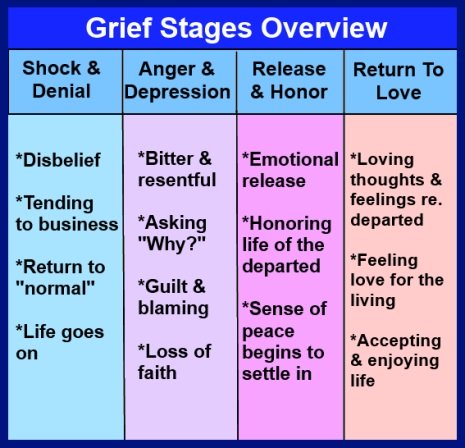
Sensations of regret or guilt may arisewondering if you could have done something differently, or sensation grief over things left unspoken. Sorrow can manifest as angertoward yourself, others, or even the person that has passed.

Navigation
Latest Posts
Understanding Journey of Relationship Growth in Trauma-Informed Therapy
Anxiety and Depression Relief
Understanding Behaviors of Anxiety Disorders